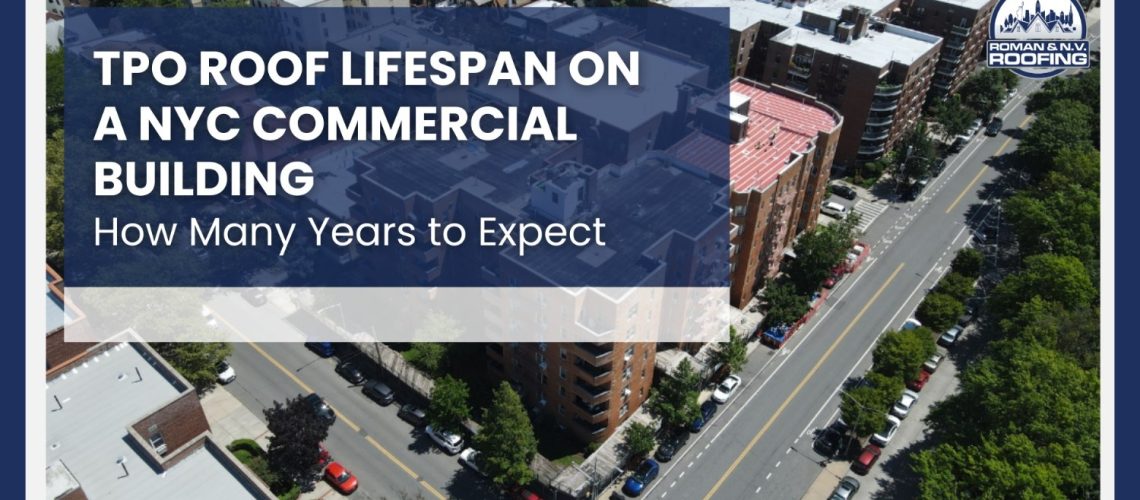
A TPO roof on a NYC commercial building usually lasts 15 to 30 years. Most roofs land near 20 years, while well-built ones reach the high end. However, the exact number depends on a few key factors. So the real answer is, “it depends, but here is how to predict it.”
TPO stands for thermoplastic polyolefin. It is a single-ply membrane, and it covers a huge share of flat commercial roofs today. In fact, industry data shows TPO now makes up roughly 40% of the commercial roofing market. Because it is reflective, affordable, and energy efficient, many NYC building owners choose it.
This guide breaks down the real lifespan, what shortens it, and how to push your roof toward 30 years.
How Long Does a TPO Roof Last on a NYC Commercial Building?
The honest range is 15 to 30 years. Most TPO roofs average around 20 years of service. However, the spread is wide for good reason. Thickness, installation, weather, and maintenance all move the number up or down.
Membrane thickness sets the baseline. TPO comes in 45, 60, and 80 mil options. Thicker membranes resist punctures and UV better, so a 60 or 80 mil roof tends to last longer. As a result, many pros recommend the thicker options for a NYC commercial building.
Warranties follow the same logic. Manufacturers offer coverage from 10 to 30 years, based on thickness and installer certification. So a longer warranty usually signals a longer expected life. However, a warranty only holds if you keep up with required maintenance and inspections.
In short, expect about 20 years from an average install. Then aim higher with the right thickness and care.
What Affects TPO Roof Lifespan on a NYC Commercial Building
Several factors decide where your roof lands in that 15 to 30 year range. Some you control, and some come with the city itself. Below are the biggest ones.
Membrane Thickness
Thicker is tougher. A 60 or 80 mil membrane handles foot traffic and weather better than a 45 mil sheet. Therefore thickness is one of the easiest ways to add years.
Installation and Seam Quality
TPO sheets join with heat-welded seams. However, those seams are also the most common failure point. When the weld is too cold, it splits, and when it is too hot, it grows brittle. So skilled installation matters more than almost anything else.
NYC Weather and Rooftop Heat
City roofs take a beating. Summer heat, winter freeze-thaw cycles, and constant UV all age the membrane. However, TPO’s reflective white surface fights back, since it bounces sunlight and lowers rooftop heat. As a result, it slows the UV damage that shortens many roofs. This reflectivity also fits NYC’s push toward cooler, more energy-efficient roofs. So a white TPO membrane can trim summer cooling costs while it protects the building.
Ponding Water and Drainage
Standing water is a major threat. Water should drain off a flat roof within 48 hours. When it lingers, it breaks down the membrane and grows algae. Therefore good drainage protects your investment.
Foot Traffic and Rooftop Equipment
NYC roofs hold HVAC units, vents, and frequent service traffic. However, each penetration and each footstep adds wear. So walkway pads and careful access help the membrane last.
TPO Roof Lifespan vs Other Commercial Roof Types
It helps to see TPO next to the other common flat-roof systems. Each one ages differently, so the comparison guides your choice.
EPDM, a rubber membrane, lasts about 15 to 35 years, especially when fully adhered. PVC, a close cousin of TPO, runs roughly 20 to 30 years. Metal systems last the longest, often 30 to 45 years, though they cost more upfront. Modified bitumen and built-up roofs usually fall in the 15 to 20 year range.
So where does TPO fit? It sits in the middle on lifespan, yet it leads on value. Because it is affordable, reflective, and energy efficient, many NYC owners pick it over pricier options. However, the right choice still depends on your budget, your slope, and your building’s needs. Therefore an honest contractor will compare systems before you commit.
Signs Your TPO Roof Is Nearing the End
A TPO roof rarely fails overnight. Instead, it shows clear warning signs first. So watching for these helps you plan before a leak forces your hand.
- Cracking or crazing. The surface gets brittle and shows fine cracks as it ages.
- Chalking. A powdery white film means UV is breaking down the membrane.
- Open or split seams. Failed welds let water in, especially during storms.
- Frequent leaks. Repeated repairs in different spots signal broader wear.
- Ponding stains. Dark rings show where water sits too long.
One or two issues may call for a simple repair. However, when several show up across the roof, replacement is usually the smarter move. Therefore a professional assessment helps you choose.
How to Make a TPO Roof Last Longer
The good news is that you control much of the outcome. With steady care, many TPO roofs reach the top of their range. Here are the habits that add years.
First, schedule a roof inspection Brooklyn NY building owners can rely on twice each year. Spring and fall are ideal, because crews catch seam and flashing issues early. In addition, inspect after any major storm.
Second, keep the roof clean and the drains clear. Because debris traps water, regular cleaning prevents ponding. So this one habit protects the membrane across the whole surface.
Third, fix small problems fast. A minor seam repair is cheap, while a widespread leak is not. Therefore early action almost always saves money.
Finally, keep records of every inspection and repair. These notes protect your warranty, since manufacturers often require proof of maintenance. As a result, good documentation can save a costly claim later.
What Does a TPO Roof Cost?
Cost matters when you weigh lifespan against value. So here is a realistic picture. Installed TPO often runs about 4 to 7.50 dollars per square foot. However, the final price depends on thickness, roof size, and access.
NYC projects tend to sit at the higher end. Because labor and logistics cost more in the city, dense rooftops with heavy equipment add to the bill. In addition, thicker 60 or 80 mil membranes cost more than 45 mil, yet they last longer.
So think in terms of cost per year, not just upfront price. A thicker roof that lasts 30 years can beat a thin one that fails at 15. Therefore the cheaper option is not always the better value. A clear quote that lists thickness and warranty helps you compare the real numbers.
TPO Repair or Roof Replacement: How to Decide
At some point, repairs stop making sense. So how do you know when to replace? The answer comes down to age, damage, and cost.
A roof under 15 years with a single problem is usually worth repairing. However, a roof past 20 years with widespread cracking or repeated leaks is a different case. At that point, ongoing repairs often cost more than a planned roof replacement Brooklyn owners can budget for.
Energy bills also tell a story. When wet insulation drives up cooling costs, replacement may pay for itself over time. Therefore weigh the full picture, not just the patch price. A trusted contractor can map the costs both ways, so you choose with clear numbers.
Frequently Asked Questions
What is the lifespan of a TPO roof on a NYC commercial building?
A TPO roof on a NYC commercial building typically lasts 15 to 30 years, with about 20 years as the average. However, the exact lifespan depends on membrane thickness, installation quality, weather, and maintenance. Because thicker membranes and skilled seam welding add years, a well-built and well-maintained roof can reach the high end. So regular inspections and quick repairs are the best way to get the most life from it.
Is TPO a good choice for a NYC commercial roof?
Yes, for most flat and low-slope buildings. TPO is affordable, lightweight, and energy efficient. Because its white surface reflects heat, it also helps lower cooling bills, which matters in a hot city. However, the install quality must be high, since weak seams shorten its life.
How often should I inspect a TPO roof?
Twice a year is the standard, ideally in spring and fall. In addition, inspect after any major storm or heavy snow. Because early detection prevents big repairs, regular checks are the cheapest way to protect the roof.
Can a TPO roof be repaired instead of replaced?
Often, yes. TPO can be heat-welded for patch repairs, so many problems are fixable. However, once damage is widespread or the roof passes 20 years, replacement usually makes more financial sense.
Conclusion
A TPO roof on a NYC commercial building should last 15 to 30 years, with around 20 as a realistic average. However, the final number is largely in your hands. Thickness, installation, drainage, and maintenance all decide where you land.
So the smart plan is simple. Choose a thicker membrane, hire skilled installers, and inspect twice a year. Because small fixes prevent big failures, steady care is what pushes a roof toward 30 years. In the end, a well-maintained TPO roof is one of the best values in commercial roofing.
Get Your TPO Roof Evaluated
Wondering how many years your TPO roof has left? Roman and N.V. Roofing inspects commercial roofs across NYC and Brooklyn and gives you a clear, honest assessment. Reach out for a roof inspection, and get a straight answer on repair versus replacement.
Written by Billy Duka, Roman and N.V. Roofing. Learn more at https://romanroofingnyc.com/
