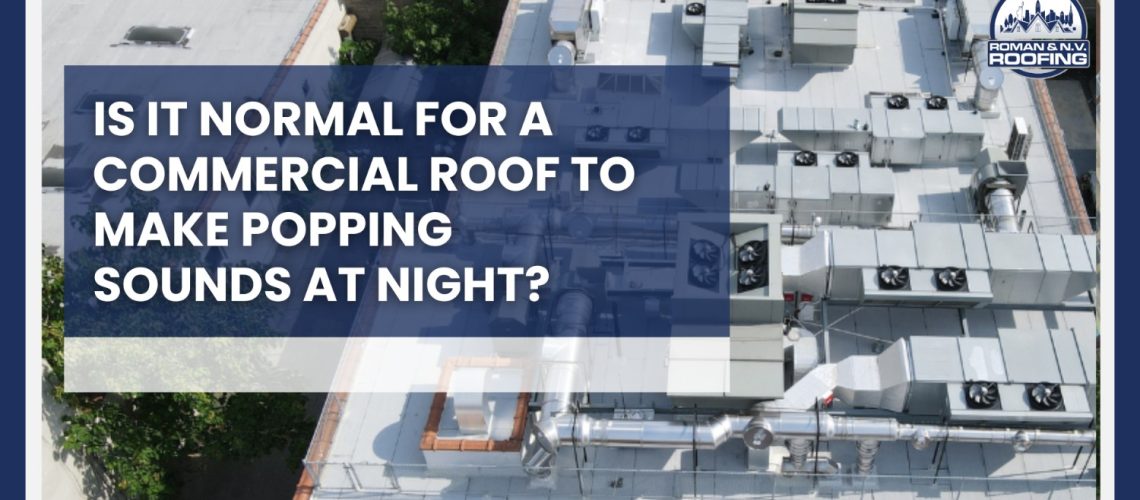
A property manager in Sunset Park called us in a bit of a panic a few weeks ago. Tenants on the top floor had reported hearing loud popping and cracking sounds coming from the roof, starting right after sunset and continuing on and off for a couple of hours. No leaks, no visible damage, just noise. She wanted to know if the roof was about to fail.
It’s one of the more common calls commercial roofing services in Brooklyn get, especially as the seasons shift. And in most cases, the answer is reassuring: popping sounds at night are usually a normal part of how a roof behaves, not a sign something is breaking. But “usually” isn’t “always,” and knowing the difference matters.
Why Roofs Make Popping Sounds in the First Place
Roofing materials expand when they heat up and contract when they cool down. During the day, sun exposure heats the roof surface, sometimes far hotter than the surrounding air temperature. Once the sun goes down, that same surface cools rapidly, and the materials contract back toward their original size.
That expansion and contraction cycle happens across metal panels, fasteners, decking, and membrane systems every single day. The popping or cracking sound is the physical result of materials shifting, settling, or releasing built-up tension as they cool. It’s the same principle behind a house creaking as it cools in the evening, just on a larger, more industrial scale.
On commercial roofs, a few components are especially prone to producing this sound:
- Metal roof panels and flashing, which expand and contract more noticeably than other materials
- Fasteners and screws, which can shift slightly in their holes as the surrounding material moves
- Rooftop HVAC curbs and ductwork, where metal components cool and contract after a hot day
- Deck seams, especially on older built-up or modified bitumen roofs where layers settle slightly over time
Why It Happens More at Night
Daytime heat builds up steadily, so the expansion happens gradually and often goes unnoticed. Nighttime cooling, on the other hand, can happen relatively fast, especially after a hot day followed by a cooler evening. That faster temperature drop causes quicker contraction, which is more likely to produce an audible pop rather than a silent, gradual shift.
Brooklyn’s weather pattern makes this more noticeable in certain seasons. Late summer evenings, when daytime highs are still intense but nights start cooling off faster, tend to produce the most temperature swing in a short window. Early spring and fall, when day-to-night temperature differences are largest, can produce similar effects.
When Popping Sounds Are Completely Normal
In most cases, popping sounds at night fall into the category of normal thermal movement if:
- The sound happens consistently around the same time each evening, typically as temperatures drop
- There’s no accompanying leak, stain, or visible damage
- The sound is isolated to certain areas, like near metal flashing or rooftop units, rather than the entire roof
- The building has had these sounds for a while without any related roof problems developing
If this matches what you’re hearing, it’s usually just the roof doing what roofs do as materials respond to temperature change.
When Popping Sounds Are Worth Investigating
A few situations move this from “normal” to “worth a professional look”:
1. The Sound Is New and Sudden
If a roof has never made noticeable sounds before and suddenly starts, especially without an obvious change like new rooftop equipment, it’s worth checking whether something has shifted, such as a loosened fastener or a deck section under new stress.
2. The Sound Is Louder or More Frequent Than Before
A gradual increase in volume or frequency can point to a fastener working its way loose over time, or a section of decking that’s flexing more than it should.
3. It’s Paired With Any Interior Sign of a Problem
Ceiling stains, a musty smell, or visible sagging alongside the popping sound changes the picture entirely. At that point, the noise may be secondary to a moisture or structural issue that needs attention.
4. The Sound Comes From One Specific Spot Every Time
Consistent noise from the exact same location, rather than general roof-wide sounds, can indicate a localized issue, like a loose panel, a failing fastener, or movement in one section of deck rather than roof-wide thermal behavior.
5. There’s Been Recent Roof Work
If a roof was recently repaired or a new system was installed and popping sounds started shortly after, it’s worth having the contractor confirm the fasteners, seams, and flashing were installed correctly and are behaving as expected.
What a Roofing Inspection Looks For When Noise Is the Complaint
When commercial roofing services in Brooklyn get a call about roof noise, the inspection typically focuses on:
- Checking all fasteners for looseness, especially around metal panels and flashing
- Inspecting rooftop HVAC curbs and ductwork connections for movement
- Reviewing deck condition for any soft spots or shifting, similar to what’s checked during a membrane inspection
- Confirming that expansion joints, where present, are functioning as designed
- Ruling out any correlation between the noise and recent weather events or roof work
In most cases, this kind of inspection either confirms normal thermal movement, which offers peace of mind, or catches a small mechanical issue, like a loose fastener, before it turns into anything bigger.
Why It’s Still Worth Getting Checked, Even If It’s Probably Fine
Popping sounds being “probably normal” isn’t the same as “definitely nothing to look at.” Tenants hearing loud noises at night are going to ask questions, and having a documented inspection on file, confirming the roof is sound, is a simple way to answer those questions with confidence rather than guesswork.
It also rules out the small percentage of cases where the noise is an early signal of something worth catching sooner rather than later, similar to how early membrane blistering or minor seam separation can be easy to dismiss until it isn’t.
FAQ: Commercial Roof Noise at Night
Is popping or cracking at night always related to temperature changes? Most of the time, yes. Thermal expansion and contraction is the most common cause of roof popping sounds, especially when the noise happens consistently as temperatures drop in the evening. It’s not the only possible cause, which is why ruling out other issues during an inspection is worthwhile if the sound is new or unusual.
Can rooftop HVAC units cause popping sounds separate from the roof itself? Yes. HVAC curbs, ductwork, and metal housing components go through their own expansion and contraction cycles as they heat up during operation and cool down afterward. This can sound very similar to roof membrane or panel movement.
Should I be worried if the sound has been happening for years with no problems? If the pattern has been consistent and there’s never been an associated leak or damage, it’s generally a sign the roof has been behaving the same way for a long time. That said, an occasional inspection is still a reasonable way to confirm nothing has changed.
How quickly should I call for an inspection if the noise suddenly changes? If the sound becomes noticeably louder, more frequent, or is joined by any interior sign of moisture, it’s worth scheduling an inspection within the next few days rather than waiting for a routine check.
Final Thoughts
For most Brooklyn commercial buildings, a roof popping at night is simply the sound of materials responding to the daily heat cycle, nothing more dramatic than that. But because that same sound can occasionally point to a loose fastener or a shifting deck section, it’s reasonable to have it checked, especially if tenants are asking questions or the pattern has changed recently.
N.V. & Roman Commercial Roofing provides commercial roofing services in Brooklyn, including inspections for buildings dealing with unexplained roof noise, movement, or general wear. If your roof has started making sounds that don’t sit right with you, we can take a look and tell you honestly what’s going on.
Call (917) 440-1800 to schedule an inspection, or request one online.
