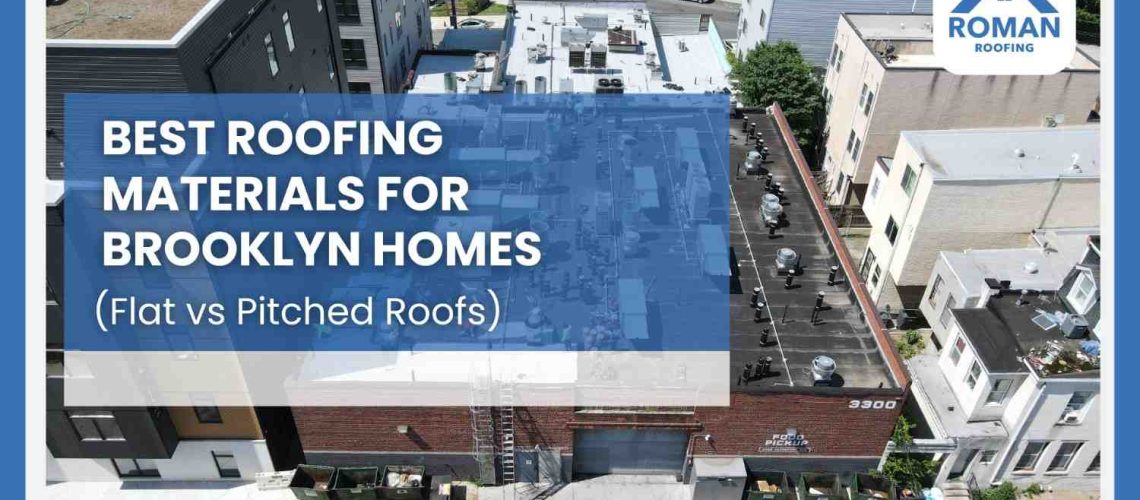
Brooklyn property owners are not short on opinions about roofing. Everyone has a neighbor who swears by one material, a contractor who pushes another, and a cousin who did it cheap and regretted it two winters later. The best roofing material Brooklyn buildings need depends on one thing above everything else: how that material behaves under the specific conditions your roof faces every single day. Salt air from the harbor, freeze cycles that crack poorly bonded seams, summer heat pushing surface temperatures past 160 degrees on dark membranes. Brooklyn does not offer mild conditions, and your material choice needs to reflect that reality. This guide gives you the straight facts, no filler.
Roof Geometry Decides Before You Do
Most people think they get to choose their roofing material freely. In reality, the geometry of your roof narrows the field before you even open a catalog. A flat or low-slope roof below a 2:12 pitch cannot drain water the way a steep roof can, and that physical reality eliminates shingles, tiles, and wood shake from the conversation entirely.
Steep-slope roofs above 4:12 operate in the opposite direction. Water sheds fast, wind uplift becomes the primary enemy, and membrane systems designed for flat surfaces become unnecessary. Matching material to geometry is not a preference. It is a baseline engineering requirement that shapes every decision that follows.
Understanding where your Brooklyn property sits on that slope spectrum tells you immediately which product category you are shopping in, and that alone saves significant time and money before you even meet a contractor.
The Real Lifespan Numbers Behind Popular Materials
Flat Roof Systems: What the Numbers Actually Show
Warranty length and actual field performance are two different conversations. EPDM membranes carry 20-year warranties, but documented field data from NYC commercial installations shows properly maintained systems routinely reaching 28 to 32 years before requiring full replacement. Current third and fourth-generation TPO products have addressed the seam chemistry issues that plagued early formulations, and certified installations today are performing well past the 20-year mark.
Pitched Roof Materials: The Gap Between Warranty and Reality
Most architectural shingle warranties are prorated after year 10, meaning coverage drops significantly right around the time shingles start showing real wear in harsh climates. Independent studies across northeast US markets show architectural shingles in high-stress urban environments averaging 18 to 22 years of actual service life. That gap matters when you are planning a renovation budget or evaluating a Brooklyn property purchase.
Ventilation: The Silent Driver of Roof Failure
Most roofing conversations skip this entirely. The material on top of your roof only performs as well as the ventilation system operating beneath it. Trapped attic heat bakes shingles from underneath, dries out the asphalt compound, and causes premature granule loss years ahead of schedule.
In winter, that same trapped heat melts rooftop snow while eaves stay cold, creating the freeze-thaw cycle that drives ice and water under shingles and into the deck. Balanced soffit-to-ridge airflow solves both problems at once. It is not an upgrade option. It is a requirement for any pitched roof expected to reach its rated service life.
On flat roofs, polyiso board installed above the deck keeps the thermal boundary outside the structural assembly, reducing condensation risk and protecting both the deck and the membrane sitting above it.
Urban Heat and the Case for Reflective Surfaces
Brooklyn sits inside one of the most intense urban heat islands on the East Coast. Rooftop surface temperatures on dark membranes regularly exceed 160 to 180 degrees Fahrenheit on peak summer days. That heat drives up cooling costs and accelerates material breakdown through constant thermal cycling at the seams and flashings.
White TPO and coated EPDM membranes reduce rooftop surface temperatures by 50 to 70 degrees compared to uncoated dark alternatives. For Brooklyn building owners managing occupied multi-unit properties, the combination of lower cooling loads and extended membrane life makes reflective surfaces one of the highest-return decisions on any flat roof Brooklyn project.
GACO and Silicone Coatings: A Different Kind of Protection
GACO silicone coatings have carved out a specific role on Brooklyn flat roofs where full tear-off is cost-prohibitive or structurally inadvisable. Applied over an existing membrane in good condition, silicone creates a seamless waterproof layer that holds up against ponding water indefinitely without degrading. For flat roof Brooklyn buildings with drainage limitations that cannot be easily corrected, that performance characteristic is genuinely hard to match.
Flashing and Perimeter Details: Where Roofs Actually Fail
Ask any experienced roofer where the majority of leaks originate, and the answer is seldom the middle of the field membrane. It is at the edges, penetrations, parapets, and terminations where water finds its way in.
On Brooklyn flat roofs, parapet walls create complex detailing requirements. The membrane must terminate correctly, cap flashing must be properly secured, and every penetration for HVAC equipment or pipe stacks needs reinforced membrane boots fully bonded to the field. On pitched roofs, valley flashing, step flashing along dormers and chimneys, and drip edge installation are the details separating a 25-year roof from one that develops problems within five. The best roofing material Brooklyn contractors can specify means nothing if the perimeter work is rushed.
Certifications, Permits, and Why They Protect You Specifically
Pulling permits for roofing work in Brooklyn is not bureaucratic friction. It is the mechanism that creates real accountability for the work done on your building. NYC Department of Buildings permits require licensed contractors, documented material specifications, and inspections that verify code compliance before the job closes out.
A rooftop installed without permits carries no verified compliance record, which becomes a direct liability when you sell the property or file an insurance claim after a storm event. Manufacturer certifications through GAF, Firestone, Johns Manville, or GACO add a second layer. Certified contractors install to manufacturer specifications, and that certification is the foundation for extended warranty coverage that a non-certified job simply cannot offer. Hiring licensed and certified means protecting your roof and your financial position at the same time.
Closing Thoughts
Choosing the best roofing material Brooklyn properties need is not a decision that rewards guessing or cutting corners. Roman Roofing NYC brings 30 years of Brooklyn-specific experience, full licensing through the NYC Department of Consumer Affairs, and active certifications from GAF, Firestone, Johns Manville, and GACO to every project. Whether your building has a flat roof showing its age or a pitched roof heading into its third decade, Roman Roofing NYC delivers the technical knowledge and on-the-ground accountability your investment deserves.
Call today for a free inspection and estimate.
Frequently Asked Questions (FAQs)
1. What is the best roofing material Brooklyn flat roof buildings should prioritize for long-term performance?
Fully adhered EPDM or third-generation TPO membranes installed by certified contractors deliver the strongest long-term performance on flat roof buildings.
2. How does Brooklyn’s climate specifically affect roofing material selection?
Freeze-thaw cycles, urban heat island temperatures, and wind exposure from the harbor make Brooklyn one of the most demanding environments for any roofing system.
3. Why do asphalt shingles fail earlier than their warranty suggests in Brooklyn?
Prorated warranty structures combined with ice dam stress, UV exposure, and temperature swings reduce real-world shingle lifespan well below the printed warranty figure.
4. Can a silicone coating replace a full flat roof replacement in Brooklyn?
On roofs with sound substrate conditions and manageable drainage issues, GACO silicone coatings offer a legitimate alternative to full system tear-off and replacement.
5. What is the most common cause of roofing leaks on Brooklyn properties?
Failed flashing at parapets, penetrations, and perimeter terminations causes the large majority of leaks on both flat and pitched Brooklyn buildings.
