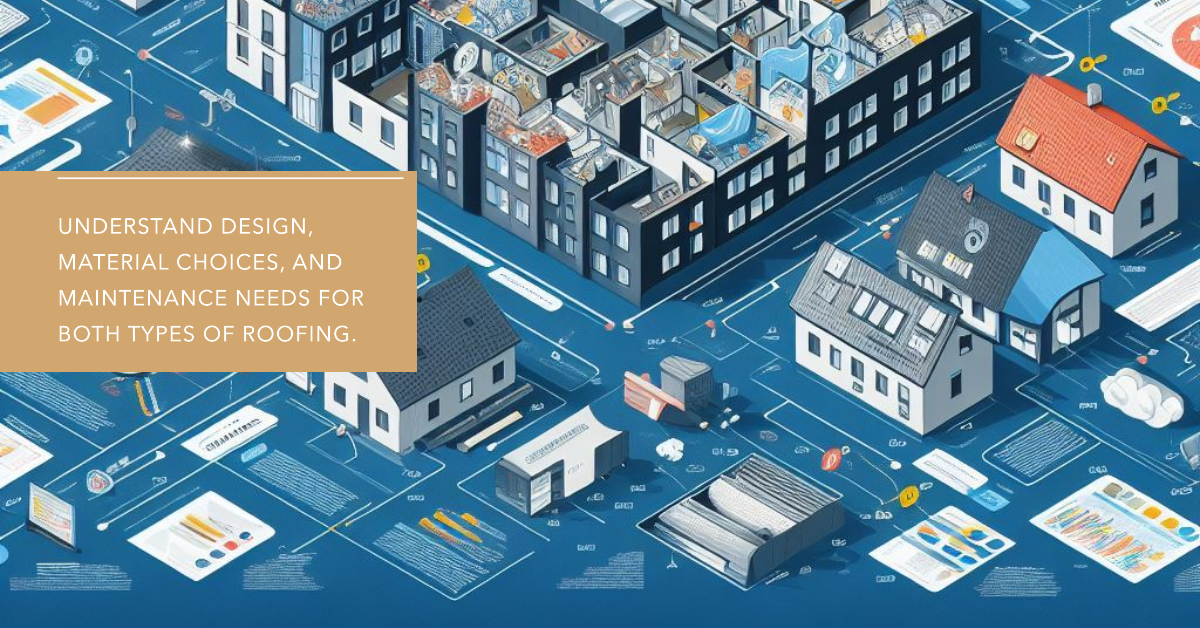
When it comes to roofing, the fundamental purpose—providing protection—is the same for both commercial and residential structures. However, the approach to achieving this goal varies significantly between the two. From design complexities to material selection, installation timelines, and maintenance protocols, each has its own set of rules and requirements. Let’s dissect these differences in greater detail.
Design Specifics: More than Just Slopes
Commercial roofs are generally flat or feature a very low slope, a design dictated by the expansive surface area they cover. This design necessitates specialized drainage systems to manage water runoff and prevent pooling, which could lead to structural issues. On the other hand, residential roofs often have a steeper pitch, adding aesthetic value while facilitating natural water runoff, thus reducing the need for complex drainage systems.
Material Choices: Durability Meets Aesthetics
For commercial roofs, materials like modified bitumen, tar and gravel, or EPDM rubber are commonly used. These materials are chosen for their durability and cost-effectiveness over large areas. In contrast, residential roofs often employ materials like asphalt shingles, tiles, or slate. These are popular choices for homes, selected for both their durability and aesthetic appeal.
Installation Complexity and Timelines
The installation process for commercial roofs is intricate and often spans several weeks. This includes the setup of specialized systems like external HVAC units and smoke stacks. Residential roofing projects are usually less complicated and can often be completed within a week. This is due to the smaller surface area and fewer structural complexities involved.
Maintenance: A Tale of Two Approaches
Commercial roofs require a proactive approach to maintenance, including regular inspections to manage the flat design, which is more susceptible to water pooling and debris accumulation. Residential roofs, however, generally require less frequent maintenance. Their steep pitch allows for natural debris and water runoff, reducing the need for regular inspections.
Cost Factors: Scale Versus Material Quality
The large scale of commercial roofing projects often results in a higher overall cost. However, the cost per square foot may be lower due to the use of more economical materials. Residential roofing, on the other hand, may have a lower overall cost but a higher cost per square foot due to the use of premium materials.
