Roofing Clinton Hill buildings takes more than a new membrane, because much of the neighborhood sits inside a landmark district. Roman Roofing repairs, replaces, and inspects roofs on its brownstones, rowhouses, and co-op buildings. Our company has 30 years of experience, holds NYC Home Improvement Contractor license #1442995, and carries liability and workers’ compensation insurance.
The Clinton Hill Historic District holds buildings that date from the 1840s through the 1920s, so many roofs sit on framing that is a century old or more. As a result, trouble usually starts at the details around the roof, not in the middle of it.
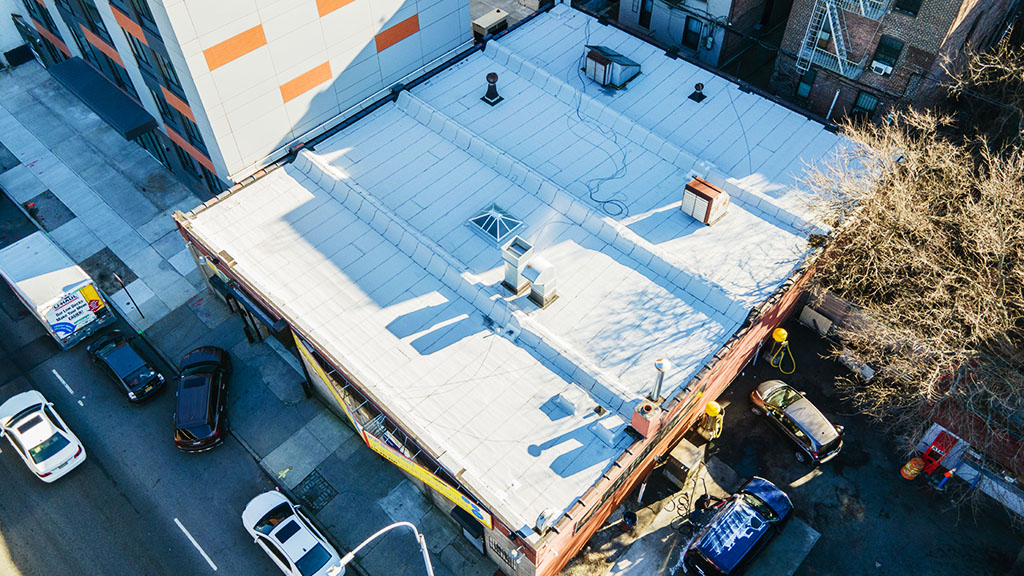
A typical brownstone roof here is flat, slopes toward the rear wall and drains into one gutter and leader. When that outlet clogs, water backs up under the membrane along the back edge. Therefore, we check the rear gutter, the leader and the back wall flashing first.
Some houses carry a slate mansard at the front with a flat roof behind it. Leaks often begin at the joint between the two, or around an old skylight or roof hatch. In those spots, we rebuild the curb and install new flashing so water sheds onto the flat roof.
Larger co-op and apartment buildings have wide roofs with bulkheads, interior drains, and rooftop equipment. For those jobs, we send the board a certificate of insurance and a written scope with the estimate. We also plan deliveries and tear-off around the residents.
The city designated the Clinton Hill Historic District on November 10, 1981, and the Landmarks Preservation Commission now reviews exterior work on the buildings inside it. However, its rules treat each part of the roof differently:
We sort your project into these categories at the estimate stage. That way, you and your architect know what to file before we schedule a crew.
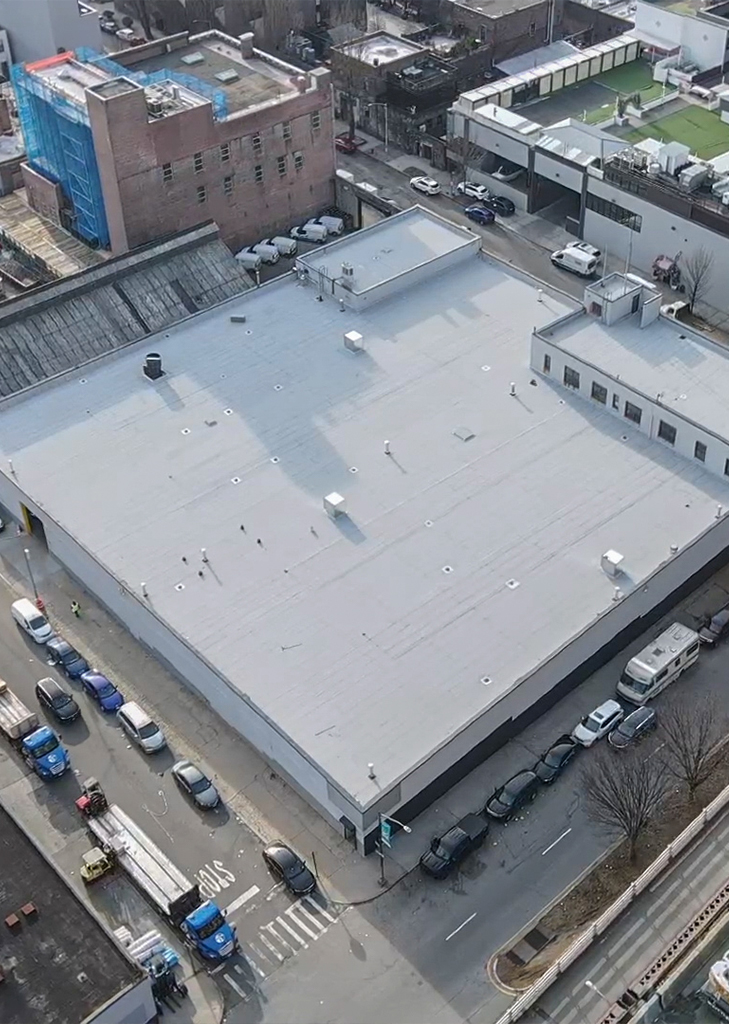
Every job starts with a free inspection, and you receive photos plus a written estimate afterward. From there, the work usually falls into one of three types.
For leak repair, we trace the entry point with a moisture meter instead of guessing from the ceiling stain. Then we patch the membrane and reseal the flashing around it.
Once a roof is past patching, we strip it to the deck and replace any rotted boards. Next, we install EPDM rubber, TPO, or SBS modified bitumen, depending on the building and the budget.
A sound roof that is starting to age does not always need replacing. In that case, a GACO silicone coating and a twice-yearly cleaning of the drains can add years of service.
Roman Roofing is a certified installer for Firestone, GAF, Johns Manville, and GACO. Because of that, each system goes down to the manufacturer’s specifications, which their warranties depend on.
We cover the full neighborhood, from Flushing Avenue down to Atlantic Avenue and from Vanderbilt Avenue across to Classon Avenue. That includes the blocks along Clinton, Washington, Waverly and Grand Avenues, the streets around Pratt Institute and ZIP codes 11205 and 11238. Our crews also work in nearby Fort Greene, Bedford-Stuyvesant, Prospect Heights and Wallabout.
Usually not. The Landmarks permit guidebook exempts flat roof replacement, but visible mansards, cornices, and gutters do need review.
Cost depends on the leak source, roof access, and materials needed. We give a free written estimate first.
SBS modified bitumen or EPDM rubber suits most brownstone flat roofs. New flashing at every wall matters just as much.
Twice a year works for most roofs, in spring and fall. Add one more check after any major storm.
Yes. We send a certificate of insurance and a written scope, and we schedule work around residents.
If your Clinton Hill roof is leaking or overdue for a checkup, call Roman Roofing at (917) 440-1800. We will inspect it at no charge and send a written estimate.